Yogesh Sharma

Healthcare is undergoing a profound transformation. In a wide-ranging conversation on the InnoHEALTH Magazine Podcast 2025, Mr. Yogesh Sharma from MAMSYS explored how artificial intelligence is reshaping not only hospitals and diagnostics, but everyday life and how the next leap may come from the fusion of quantum computing and AI.
Healthcare Begins Long Before the Doctor’s Visit
Healthcare is often misunderstood as something that begins in clinics or hospitals. In reality, it starts much earlier:
“Healthcare is not about just going and visiting the doctor. It comes well before that.”
According to him, daily lifestyle choices nutrition, exercise, sleep, stress management, and even social interactions form the real foundation of health. Preventive care begins with personal responsibility and awareness.
AI-powered applications, wearable devices, and digital health platforms are now assisting individuals in making informed decisions throughout the day. From tracking calorie intake and monitoring sleep cycles to suggesting workout routines and stress-reduction techniques, AI is embedding itself into everyday life. Rather than reacting to illness, technology is enabling a proactive approach to well-being.
Making Complex Medical Data Understandable
While lifestyle support is important, AI’s influence extends deeply into clinical care. Medical diagnostics generate enormous volumes of data lab reports, imaging results, and physiological metrics that are often difficult for patients to interpret.
Mr. Sharma highlighted this gap, noting that when patients receive testing reports, many struggle to fully understand them
AI-driven platforms are now bridging this divide by translating complex medical data into accessible insights.
Today’s AI-enabled systems can measure and analyze hundreds of sophisticated health parameters not just basic pulse and heart rate, but advanced indicators across multiple bodily systems
These technologies support doctors in making more precise diagnoses while empowering patients with clearer understanding.
At the same time, Mr. Sharma offered an important reminder:
“At the end of the day, all the AI systems which we are talking about today are being fed information by the humans.”
AI enhances human capability but it does not replace human expertise. The quality of AI systems ultimately depends on the knowledge, data, and judgment provided by medical professionals and researchers.

The Next Horizon: Quantum-Enabled AI
Looking toward the future, Mr. Sharma expressed particular excitement about the convergence of artificial intelligence and quantum technologies:
“One of the future technologies is a combination of quantum and AI.”
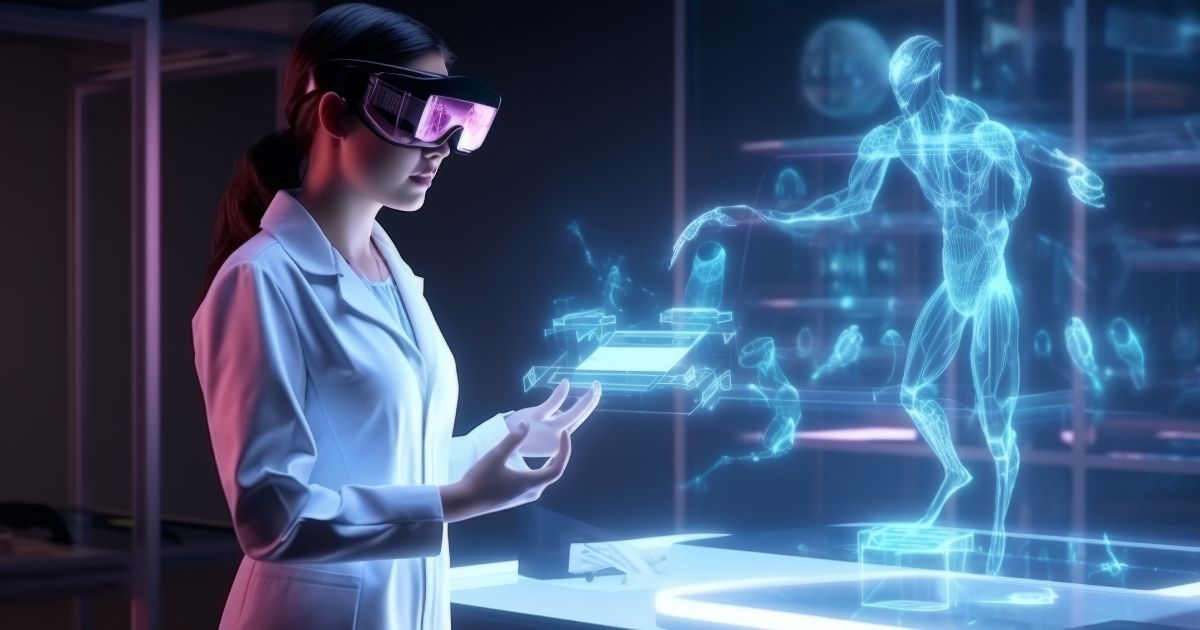
He revealed that his team is actively researching and developing systems in this emerging field. Among their innovations is a concept they describe as “quantum resonance nodes” personal quantum-enabled AI agents designed to assist individuals in maintaining healthy daily routines.
The promise of quantum-enhanced AI lies in dramatically increased computational power. Quantum systems have the potential to process complex biological, genetic, and lifestyle data at speeds and depths beyond traditional computing. This could enable:
- More accurate predictive health modeling
- Earlier disease detection
- Hyper-personalized lifestyle recommendations
- Real-time adaptive health monitoring
According to Mr. Sharma, this convergence could redefine healthcare as we know it, transforming it into a continuous, intelligent companion rather than an occasional medical intervention
Reshaping the Healthcare Ecosystem
AI is already altering the structure of healthcare systems worldwide. From imaging analysis and robotic-assisted procedures to remote monitoring and virtual consultations, technology is expanding access and improving efficiency.

Mr. Sharma observed that doctors are increasingly adopting AI-based tools, which are
“changing the shape and size of the healthcare system itself”
These advancements not only streamline operations but also enhance diagnostic precision and patient outcomes.
As quantum technologies mature, this transformation may accelerate further, bringing together advanced analytics, personalized medicine, and predictive healthcare on an unprecedented scale.
Conclusion
Artificial intelligence is no longer a futuristic concept it is actively shaping daily routines, clinical diagnostics, and healthcare infrastructure. As Mr. Yogesh Sharma suggests, the next major evolution may come from the integration of quantum computing with AI.
From preventive wellness to advanced medical analytics, the future of healthcare appears increasingly intelligent, predictive, and personalized. Yet, as he reminds us, even the most advanced systems are grounded in human knowledge and vision.